Okay, so hopefully you’re understanding how checks work as well as the dangers in using them.
Yeah…why are those still a thing?
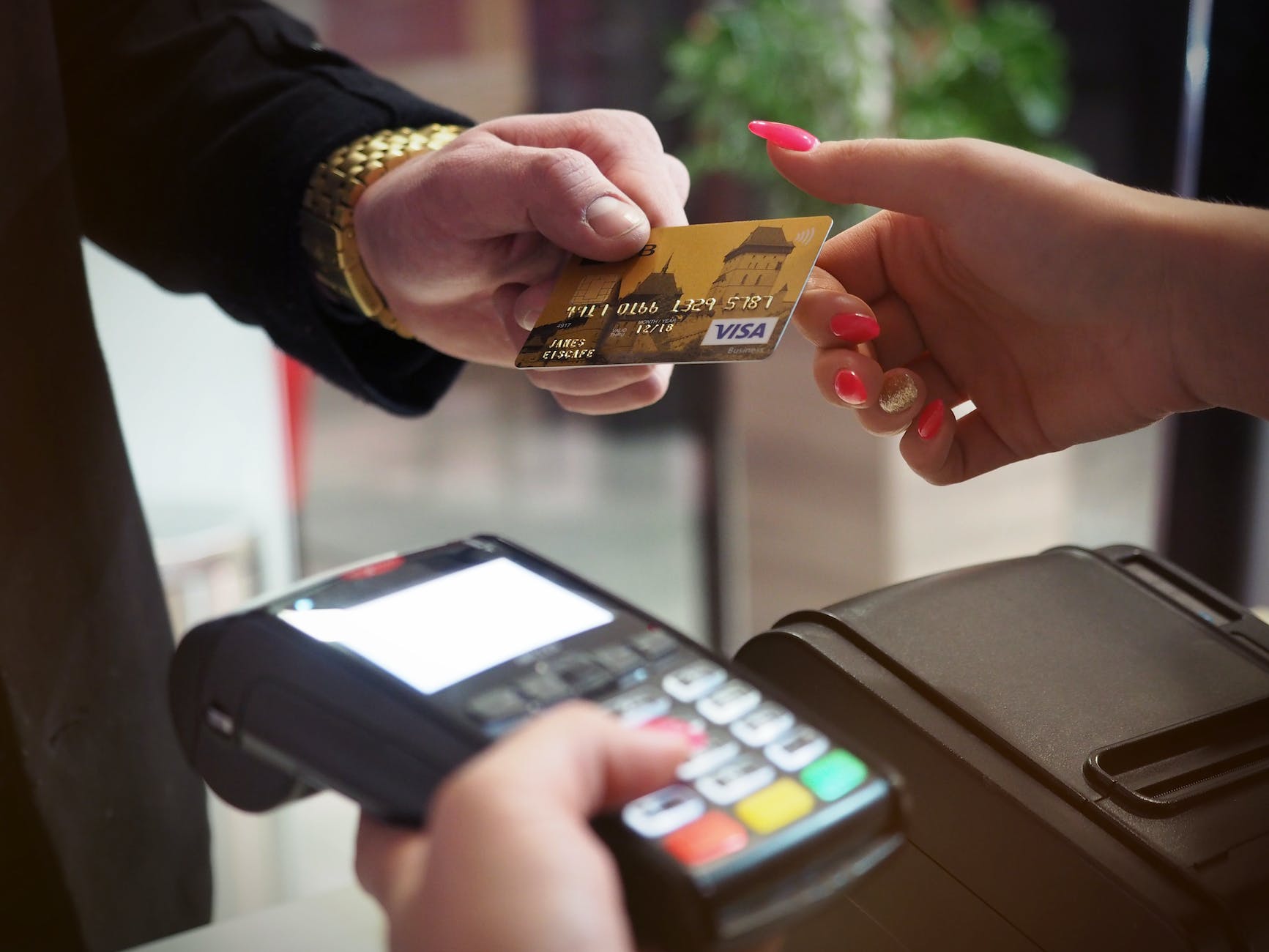
We’ll get to that in the next post. For now, let’s talk about that other thing your bank sent you, the debit card, and how it solves a lot of the problems checks have.
Solving the Biggest Problem
You can think of the main issue with checks as them being a promise. Remember, with checks, they are “promises” that your bank will give the person taking your check all the money the check is worth. If you don’t have the money when the person decides to cash the check, you are in trouble.
Right, so how much money is in my account, how much I spent, etc. all needs to be carefully tracked so I don’t bounce a check.
Right, and that’s a lot of things to keep track of!
A debit card does away with the whole promise thing, with just one caveat I’ll cover later. A debit card does this by:
- Giving you instant access to your money. While checks are promises, debit cards are pretty much just like using cash. Swiping, tapping, or inserting the card is basically equivalent to handing over the actual money itself.
- Preventing you from accidentally overdrawing your account if you decline the optional overdraft protection. In other words, debit cards won’t let you break your promise like you can with checks.
Say Thanks to your Bank Today
How does that little plastic card do it? It all comes down to the card electronically linking your purchases directly to your bank account. This makes it so your bank can instantly track all of the purchases and ATM withdrawals you’ve made on your card!
That’s the “instant access” part, right? That would make it easy to see how much is in my account and what I’ve been spending. What about the accidental overdrawing protection?
As you use the card, your bank has, in a simplified way, been “setting aside” the money they’ll take out of your account to cover those charges, right when you use the card. So they’re saying “You have $100 and, since the last time we checked, you’ve spent another $20”.
So they know how much I have and how much of that I’ve spent.
Right! And when those two numbers equal each other, you’ve spent all your money. And once you’re out of money, that’s it! The bank will block, or “decline”, all future charges until you put more money in the account.
So if I run out of money, I can’t buy anything unless I put more money in the account?
That’s right! You’d go to purchase something or make a withdrawal from an ATM and you’d get a “declined” message instead of the regular “approved” one and you won’t be allowed to make the purchase or withdrawal.
That sounds really embarrassing. Are you sure this is a good thing?
I think for some people, it’s absolutely a blessing in disguise, even if it’s a bit embarrassing. If you’re not good at keeping track of your money, this “feature” of a debit card makes it so you can’t accidentally (or intentionally) spend money you don’t have. You then avoid owing that overdrafted money to the bank and all the extra penalties that go with it. There are no promises to keep like with checks; you either have the money at the time of purchase, or you don’t.
Overdraft Protection: Blessing or Curse?
Now, some folks really don’t like the embarrassment of a declined card, so banks came up with a solution: overdraft protection.
Now that sounds like a good thing!
Well, maybe. Overdraft protection means you can have no money left in your account and the bank won’t decline further charges you make; they’ll “protect” you against overdrafting. You get the thing you’re buying, even though you don’t have the money, and avoid the embarrassment of a declined card.
Sounds like a pretty good deal, but this means that, just like with checks, you’re spending money you don’t have. The bank will hit you with all the same overdraft fees, just like with a bad check. Again, spending money you don’t have is a problem. Don’t do it!
Yikes, I see. So what would you choose? Overdraft protection or no?
If it’s hard for me to keep track of my balance, or I’m just starting out and learning how checking accounts work, I’d skip the overdraft protection so that I know I’m not accidentally spending money I don’t have. It sucks having your card declined, but getting slapped with overdraft fees sucks a lot more. Besides, if you’re frequently running your account dry, you REALLY shouldn’t have overdraft protection as you’ll rack up those fees in no time. Once you get more comfortable managing your money, you can add overdraft protection to your account, if you’d like. It is a good safety net if you’re low on money and need some in an emergency, but only in a true emergency!
So debit cards are the way to go. Why in the world do checks still exist?
Ah right, you did ask that earlier. More on that in the next post!
Thanks for reading.
 Common Cents