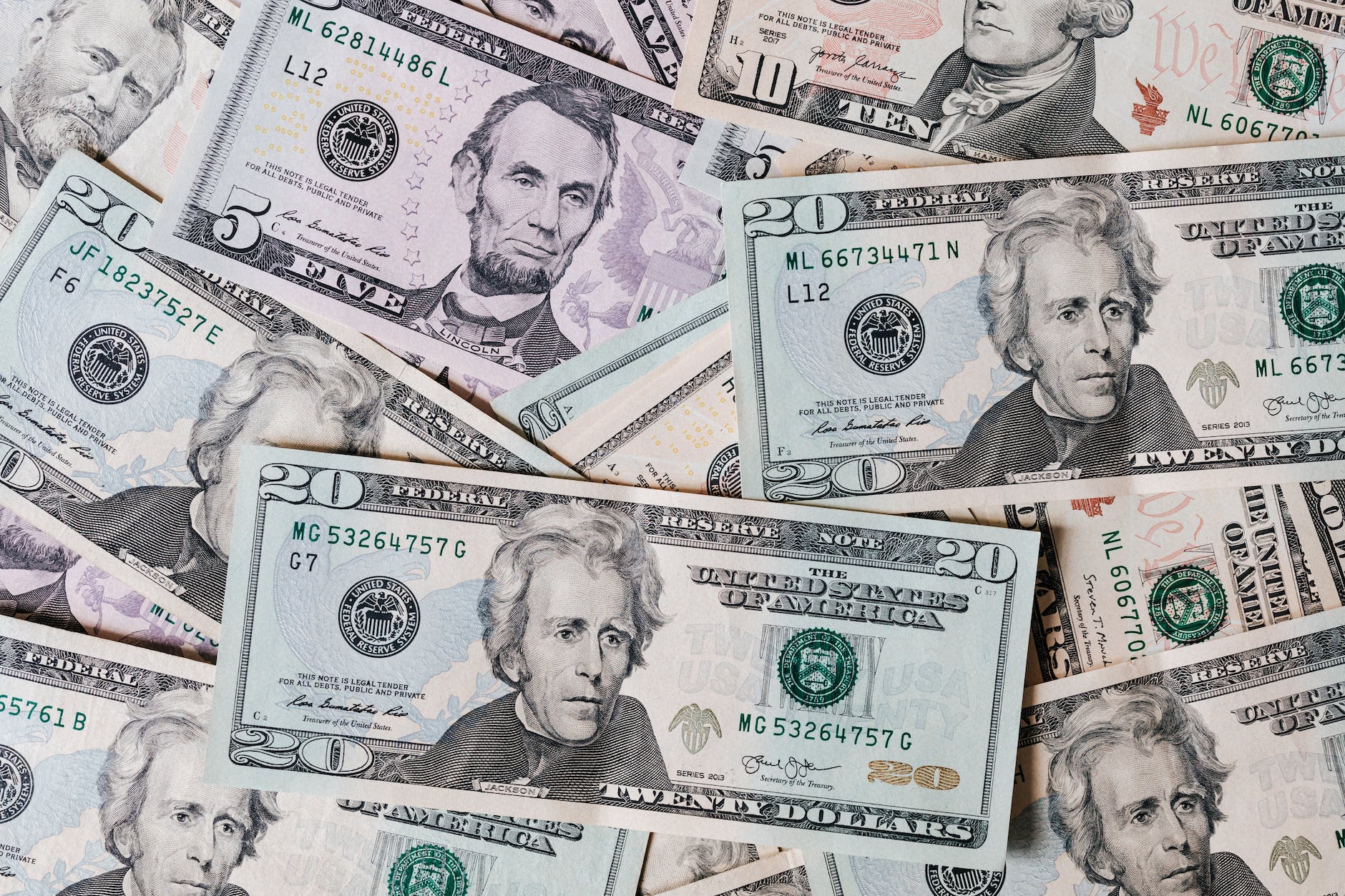
Alright, gather round. This is going to be important.
We’re going to start at the very beginning of understanding personal finance by talking about money. Yup, money. You probably think you know what money is already, but I can guarantee it’s more complicated than you think.
Nah, I know what money is. Got a piggy bank and everything.
Hey, that’s actually a pretty good start! You’re right that the loose change in your piggy bank is indeed, money. But have you ever wondered why those metal coins are considered money at all? I mean, who says it’s money? And why metal coins? Why not gold nuggets or silver bars or little bits of belly button lint?
Before we can get to any of that though, we’ll need to talk about why we need money in the first place.
This sounds like it’ll be boring. Do we have to? I kinda want to know why I can’t use my belly button lint for money.
Fair enough. There are boring bits and your belly button lint is, no doubt, intriguing. But I swear on all that is good in this world that it all eventually adds up to a really fascinating, and dare I say inspiring, part of our everyday lives.
Money is amazing
Every single day you interact with money and make economic decisions. You use money to buy things, hire people to provide services (like getting a haircut or doing your taxes), and more. Money drives it all. Even when you don’t buy something everyday, you still use money to think about the value of things; about how much things are worth.
Look, you can try this right now: what costs more, a bar of chocolate or an oil change? An oil change, right? Stop right there though! How did you know the answer to that question without looking at a bunch of chocolate bars and Jiffy Lube advertisements for their prices?
Well, it’s obvious. You have to pay more for an oil change than a chocolate bar. Everybody knows that.
That’s what I’m trying to say though, it’s not obvious at all without money. Said another way, the fact that you know immediately that oil changes cost more than chocolate bars is only obvious to you because money exists and you use it every day. The underlying reason an oil change costs more than a chocolate bar is because the raw materials to create the oil cost more and the labor to change the oil is expensive too. The chocolate bar is (usually) mass-manufactured using readily-available ingredients so they can make many of them cheaply. Simply put: the oil change is worth more because it’s harder to produce in terms of ingredients and actual work done than the chocolate bar.
The best part about all this? You didn’t need to know anything about the process of doing oil changes or making chocolate bars in order to compare them! It’s all right there, baked into the price, thanks to money.
Okay that makes sense. So money is nice because the price of things lets us compare those things without needing to know how they’re made. Even if we don’t know the exact prices, we can still compare things based on how relatively expensive they are compared to each other. Neat! What else does money do?
Well, it makes it much easier to trade with other people!
What do you mean “trade” with other people? I buy things and they sell things right? Or vice versa. That’s not trading though…is it?
Actually it is! It’s just that money makes it so different parts of the trade can happen at different times. Maybe a story might help to explain.
A story that might help to explain
Let’s imagine a world where we get rid of money and want to go on a road trip.
Okay first we’re going to need to fill up our car, so off to the gas station! We get there and start pumping fuel and the owner comes running out of the building, screaming at us!
“You’re stealing my gasoline!”
“What?” you say, “No I’m not! Don’t worry about it, I’ll pay you for it.”
“Oh yeah? How do you plan to do that?” the owner asks.
“Well, let’s see. I’ve got some cash here…oh! I forgot. We got rid of money…”
So, what do you do? Well, it just so happens the owner needs his tire inflator repaired since the last Jeep caravan that went through on their way to the Offroadin’ School for Wayward Jeeps broke the tire inflator.
“You know how to fix one of those?” the owner asks. “You fix that and you can have the gasoline.”
“Well, no…” you respond sheepishly, “I don’t really. I’m really good at putting out fires though!” (you’re a firefighter in this scenario).
“Okay then, bud. You got yourself a deal. If anything here catches fire, you personally come and put it out. Then you can have the gas.”
Yikes. How are you going to explain this arrangement to the station chief? How will you put out gasoline fires all by yourself? Worse, imagine what you would do (or even could do) if you didn’t have skills that were helpful to the operation of a gas station? What if you were a music teacher or a professional golfer? How would you pay for your gas then?
I’m guessing money?
Yup, money! The gas station owner agrees to accept “money” (more on what, exactly, money is in a moment) and you agree to pay him in this same “money”. So, in other words, money is something that everyone agrees to use to exchange goods and services. So instead of offering firefighting services, you can offer money instead and the gas station owner can use that money to pay taxes for firefighting services later. No more trying to figure out what the gas station owner needs right now so you can trade for that for what you want (his gasoline)! Economist eggheads call this feature of money “acting as a universal medium of exchange”. “Universal”, because everyone agrees to accept it, and “medium of exchange” for being a go-between when buying and selling goods and services. Pretty handy right? Way easier than trading fire fighting favors for a full tank.
I see. So we’re still trading stuff, it’s just that we use money as a kind of placeholder so that we don’t have to have a 1:1 trade right now. Got it.
Now, before I forget, get back to the coins in my piggy bank and my belly button lint! You said they’re money right? Well, maybe not the belly button lint, but definitely the coins. And didn’t money used to be gold? What happened there?
Indeed, money used to be gold. So then, where is your gold? Why do you only have piggy bank coins now for money? Can you trade them in for gold?
Heck yeah! I’ll be rich!
Ah, the answer I was looking for was “no”.
Ah, not rich then.
Sadly, no. But maybe one day!
A game of make-believe
Money is, and always has been, a game of make-believe. Lots of things nowadays count as money including cash, coins (like those in your piggy bank), checking accounts, savings accounts, and more. In the past, money was gold or silver and was even once a series of heavy, iron bars!
Woah, no thanks on the iron bars. But really, which one is the real money? Which one has real value?
Well, truth be told, none of them. Like I said, it’s all kind of make-believe. Gold is shiny, sure, but it’s also really soft and, historically, didn’t have any use beyond jewelry. The heavy bars were made of iron and iron is pretty useful. But not in bar form usually. Paper money is lightweight, durable, and can be folded up to fit in your pocket, sure. It doesn’t really do anything else besides that though. None of these “monies” have any underlying, “real value” beyond what goods and services they can be traded for.
Sure, but if I have gold, then it really is real. I mean, I can hold it in my hand.
You can also hold paper money in your hand.
Oh. Right. But the government can print more of those and make them useless right? You can’t print more gold. So it’s got something special about it right there: it’s rare!
That is true, yes! And, in fact, all money must be at least somewhat rare to have value. Consider this though: when using gold as money, there are some rather complicated circumstances that can arise where your country is forced to send most of their gold to other countries and then…whoops no more gold for your country. And you can’t just print more gold, so what do you do? Well, with less gold things cost less, but everyone also makes less money as a result. You know what doesn’t cost less though? Your loans. Using gold as money can mean prices go down, but your debt doesn’t. Instant bankruptcy. This is actually exactly why no modern country still uses gold as a form of money.
Back to what makes all money valuable is what we all agree it can do; what things and services money can buy. And in that way, it doesn’t really matter what the money is made of, so long as we all agree to accept and use money to buy and sell things.
So we’re all just kind of agreeing to play by the rules and that’s what gives money its value?
Yup! This is also why you can’t use your belly button lint as money. Nobody is agreeing to use that as money, so it isn’t money. Thank goodness.
Thinking about this in a bit broader sense: we give money its value by agreeing to play by the rules, and in that way money “stores value” for us! We get money from working a job or selling things now and can use that money later to buy things for ourselves when we need or want them.
Kind of like a battery right? You charge it up now to use later. Money comes “charged up” with value that you can use later. That’s also why it doesn’t matter what we call money, as long as we all agree to use the same things to store value.
Bingo! And in doing so, we can also talk about very different things via money’s ability to store value. In other words, we don’t have to say that “1 gallon of gasoline = 15 seconds of firefighting service” because we can talk about both things in terms of money instead. 1 gallon of gasoline is $3.00 and 15 seconds of firefighting is also $3.00 (although it’s probably a lot more than that). Economists like to call this “common language” aspect of money “acting as a unit of account”.
So, money gives us a common thing to trade, it holds value so we can make sales and purchases at different times, and it allows us to speak the same language when it comes to value. Does gold work for these purposes? Sure does! And paper money? Yup! And seashells! And heavy iron bars too! Again, the common denominator here is that we are all playing a bit of make-believe and we’re all agreeing to keep doing so. It is the FAITH in the system that keeps everything working.
Perhaps that’s a bit terrifying to you. It certainly is to me! But it’s also kind of inspiring that people around the world have been able to trust each other and believe in this money system enough to keep it going for thousands of years. Not bad humanity, not bad.
 Common Cents